


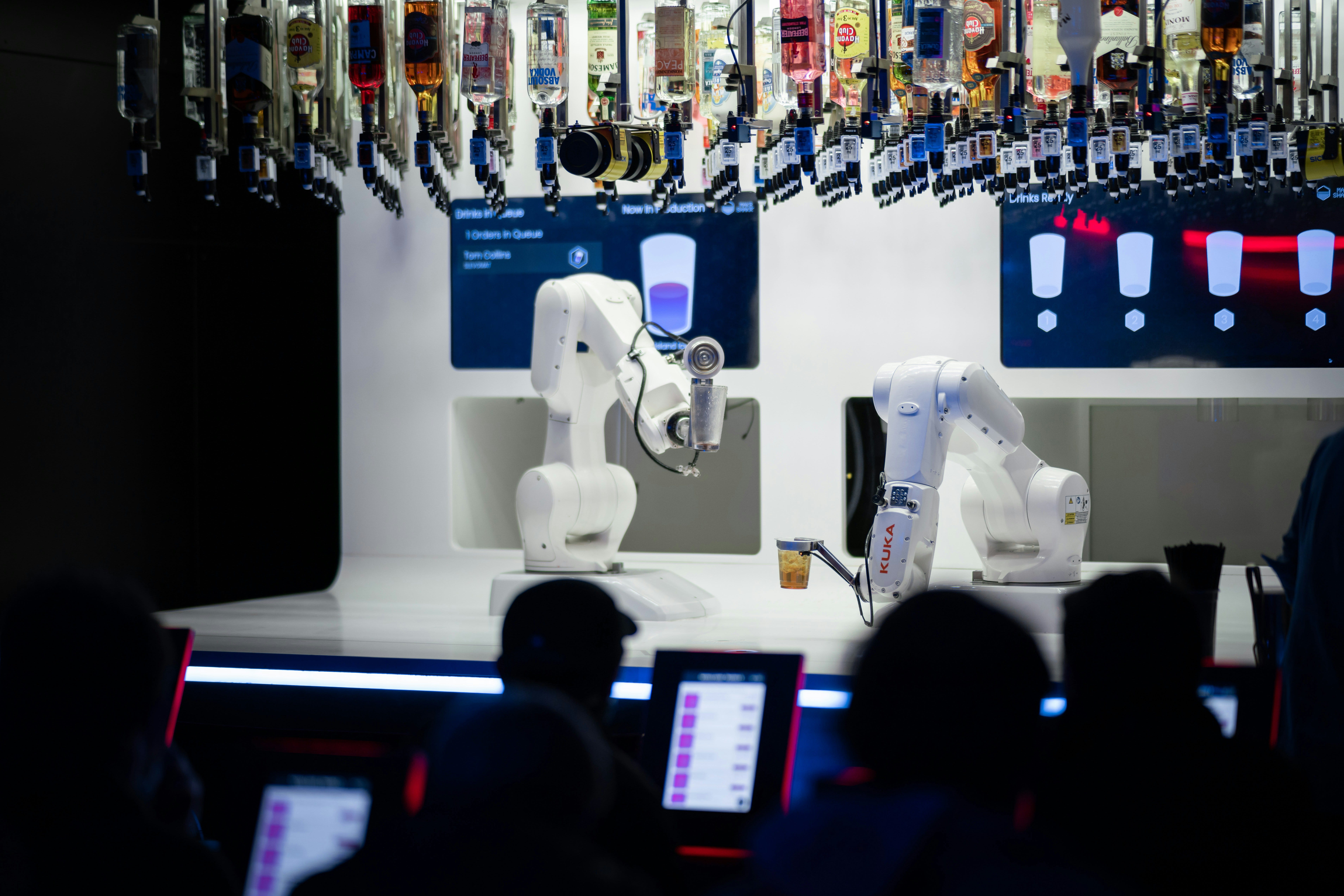
Your newest customer isn’t human.
They never see your hero image. They don’t read your reviews. They show up at your site, scan your structured data, compare you to four competitors in 200 milliseconds, and decide — or skip you entirely.
As I argued in the last piece, the next product strategy shift isn’t web vs mobile. It’s human vs agent.
The question now is what businesses do about it.
The temptation is to treat the agentic customer as an extension of the team that handles humans — same funnel, same metrics, maybe a structured data feed bolted on. That’s the mistake the mobile laggards made in 2012, and it cost them a decade.
The winning approach is to design your org for both customers. First, though, you have to understand what an agentic customer actually is.
What is an agentic customer?
It’s worth pausing on what we really mean by agentic customer.
The human customer is what we’ve always known. A real person opens an app, navigates a menu, fills out a form, reads a confirmation screen. The product, therefore, is designed around what a person can see, tap, remember, and tolerate.
The agentic customer – or agentic shopper - is new. Upstream, a human may tell the agent “I want to buy a pair of dark-wash, slim-fit jeans,” then Gemini takes over and acts on the human’s behalf — searching your site, comparing to Levi’s, Madewell, and Everlane, and deciding. The human never visits. (In the future, agents may even decide on their own when you may need a pair of jeans – without anyone telling them.)
The defining trait of an agent is latitude. Unlike the backend systems your customers never see, an agent doesn't just execute instructions — it interprets them, and decides how to act. The Amazon-Perplexity lawsuit is exactly this question. Perplexity’s agent showed up at Amazon to shop on behalf of humans, and Amazon objected to the latitude it took. The courts now have to draw a line that didn’t exist a year ago.
The agentic funnel breaks at every stage
When an agent is the customer, bolting on additional metrics and adding to your existing team’s charter fails as a strategy because your existing funnel - optimized around a human customer - breaks at every stage.
Consider what changes:
Discovery. SEO was already weakening by the early 2020s. When you ask ChatGPT to find a pair of jeans, it doesn’t care which brands paid Google to rank at the top. It searches for patterns of reliability and fit. New funnels, new placements, and a new acronym — generative engine optimization — are coming, but the larger point is that the discovery funnel you built for humans is no longer the discovery funnel that matters.
Comparison. If an agent does the comparison shopping, your conversion-rate optimization is competing inside a model’s reasoning. The agent never sees your hero image, your social proof banner, or your urgency timer. It sees a structured product feed and decides on attributes that have nothing to do with the persuasion architecture you built for the human eye.
Brand. Your brand has historically lived in the experience — the colors, the voice, the moments of delight. When an agent strips your site to structured data and reads the answer back in its own voice, brand has to live somewhere more durable: in data, trust, and authority.
Each stage of the funnel — discovery, comparison, brand — needs to be redesigned for a customer who doesn’t see screens, doesn’t read copy, and doesn’t make decisions the way humans do.
Three questions for your leadership team
The companies that win this transition will need two parallel funnels — a human funnel and an agentic funnel — with the discipline to recognize they’re different products serving different customers, requiring different metrics, design principles, and probably team structures.
That’s an organizational question. Here’s what to ask your leadership team:
Who owns the agentic customer experience? If the answer is “the existing product team will handle it as part of their roadmap,” you’ve already lost. The agentic surface needs dedicated ownership the same way mobile needed dedicated ownership in 2012 — not because it’s separate from the company’s mission, but because the design and metrics are different enough that part-time attention produces mediocre work on both sides.
What does “good” look like in the agentic funnel, separately from the human funnel? Conversion, retention, NPS — most of these don’t translate cleanly. Agent-mediated acquisition has different unit economics, different attribution, different competitive dynamics. If your dashboards don’t separate them, you’ll optimize the average of two different things and win at neither.
Where does the moat live when one of the two funnels strips the interface away entirely? If the honest answer is “in our UX,” you have a real problem on the agentic side. If the answer is “in our data, our network, our trust, our judgment,” you have something to build on for both.
The framework to carry into the 2030s
Peter Senge’s observation that “the ability to learn faster than your competitors may be the only sustainable competitive advantage” is as true as ever. The product leaders who leaned into mobile early in 2010 didn’t win by abandoning their web product. They won by building two surfaces deliberately, with the org structure to support both, while their competitors were still treating mobile as a side project.
We’re at the same kind of inflection point now. The discipline of product management — the way we draw org charts, write specs, run experiments, define a “good” experience — was built for a world revolving around one customer. Now, a second customer is opening alongside it, and the companies that recognize the agent as a parallel customer will look, in five years, the way the truly mobile-savvy companies look now.
Where does the agentic funnel show up in your org chart? And if the answer is “it doesn’t yet” — what would it take to get it there before your competitors do?
I want to be that “agentic” customer. No longer navigating past all those testosterone generating images and videos that magically show up right under where my fingers grip my mobile.